Corporate Interior Design Solution for Growing Co-working Spaces
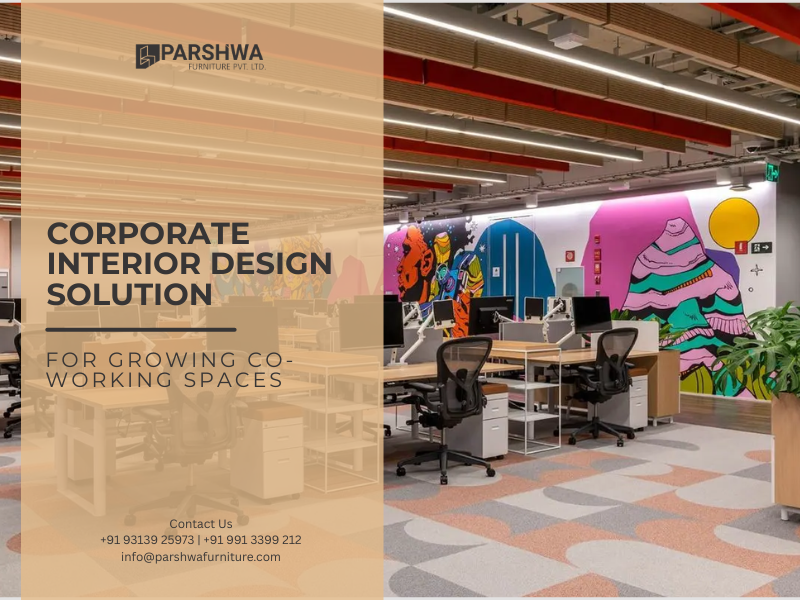
The Growth of Co-Working Spaces and the Need for Smart Interior Solutions
The New Reality of Co-working Infrastructure
Modern co-working environments must support multiple work styles within the same floor plate. On any given day, a space may host individual freelancers working quietly, a startup team collaborating intensely, and a corporate client conducting confidential meetings. Designing for this diversity requires precision.
Unlike traditional offices with fixed seating layouts, co-working spaces experience dynamic occupancy shifts. Membership tiers change. Teams scale up or down. Event zones transform into workshop areas. Without strategic interior planning, such flexibility becomes operational chaos.
This is where structured corporate interior solutions make a measurable difference. Layout planning, circulation mapping, acoustic zoning, lighting strategy, and workstation configuration must work together as one cohesive system. Growth-oriented brands cannot rely on fragmented design decisions; they require a unified execution framework that anticipates real-world usage.
Why Turnkey Execution Is Critical for Growing Brands
Expanding co-working operators often face one recurring issue: inconsistency. When multiple vendors handle design, carpentry, modular systems, and installations separately, alignment suffers. Timelines stretch. Budgets escalate. Finishes vary across locations.
A professionally managed office furniture turnkey project in Ahmedabad or any major Indian city eliminates these inefficiencies. Turnkey execution consolidates responsibility under one structured process-site evaluation, layout planning, manufacturing, quality checks, delivery, and installation.
This model ensures:
- Standardised material specifications
- Controlled execution timelines
- Budget transparency
- Uniform brand identity across locations
For operators planning multiple centers, office furniture turnkey projects in India provide scalability without losing design integrity. Consistency strengthens brand recognition, while centralized execution reduces operational friction.
Parshwa Furniture integrates design, manufacturing, and installation into a streamlined delivery model that prioritizes accountability and precision.
Space Planning That Maximizes Revenue per Square Foot
In co-working, every square foot carries financial weight. Underutilised corners reduce profitability. Overcrowded zones reduce member satisfaction. Effective space planning balances density with comfort.
A high-performing corporate interior design solution begins with understanding usage patterns rather than theoretical layouts. Circulation paths are mapped to prevent congestion. Workstation clusters are positioned to encourage collaboration without increasing noise spillover. Private cabins are strategically placed to maintain visual openness while protecting confidentiality.
Storage planning also plays a crucial role. Compact, well-engineered storage units free up rentable area. Modular workstation systems allow reconfiguration when tenant requirements change.
When designed intelligently, the interior becomes a revenue optimization tool rather than just a cost component.
Ergonomics: A Retention Strategy, Not an Accessory
Many co-working brands underestimate the role of ergonomics. Yet member retention is directly linked to comfort. If seating lacks lumbar support or desk heights are inconsistent, dissatisfaction builds silently.
Modern office furniture turnkey projects integrate ergonomic engineering into every workstation. Adjustable chairs, appropriate desk depth, cable management integration, and task lighting alignment all influence user experience.
High-traffic spaces demand furniture that maintains structural stability even after continuous use. Weak joinery, low-grade materials, and unstable frameworks lead to maintenance disruptions.
Parshwa Furniture emphasizes performance-driven manufacturing, ensuring that durability and user comfort operate together. In co-working environments where first impressions and daily usability matter equally, ergonomic precision strengthens brand credibility.
Interior Design as Brand Positioning
A co-working space communicates its identity long before a sales conversation begins. Reception design, material finishes, lighting tone, and furniture detailing collectively shape perception.
For expanding operators, consistency across cities becomes essential. An office furniture turnkey project in Ahmedabad should reflect the same brand language as a center in Mumbai or Bengaluru. That does not mean replicating identical layouts. Instead, it requires a standardized design framework supported by adaptable elements.
Color palettes, surface finishes, workstation profiles, and meeting room styling must align with the brand's positioning-whether it is corporate, creative, tech-driven, or premium.
Strategic corporate interior solutions ensure that aesthetics support business objectives rather than distract from them.
Modular Infrastructure for Scalability
Growth demands flexibility. Co-working operators frequently resize cabins, introduce enterprise zones, or convert open areas into event spaces. Fixed carpentry structures restrict such agility.
Modular systems provide a future-ready alternative. Demountable partitions, reconfigurable workstation clusters, and flexible meeting tables allow quick transformation without structural demolition.
Office furniture turnkey projects in India increasingly prioritize modular engineering because it minimizes downtime during reconfiguration. Instead of shutting down entire sections for renovation, operators can adjust layouts with minimal disruption.
Scalability becomes smoother when infrastructure is designed to evolve rather than resist change.
Durability in High-Usage Environments
Co-working spaces experience more wear and tear than traditional offices. Multiple users interact with the same furniture daily. Relocations, rearrangements, and constant movement test structural integrity.
Material selection therefore requires technical evaluation. High-pressure laminates, powder-coated metal frameworks, reinforced hardware fittings, and moisture-resistant engineered boards extend lifecycle performance.
Quality-focused office furniture turnkey projects consider load-bearing capacity, edge finishing durability, and long-term joint stability. Investing in stronger materials reduces recurring repair costs and protects brand image.
Parshwa Furniture integrates industrial-grade standards into its manufacturing processes, ensuring that aesthetics never compromise structural strength.
Technology Integration Without Clutter
Modern members expect seamless connectivity. Power access, charging points, cable routing, and conference room AV systems must be integrated without creating visual clutter.
Intelligent design conceals wiring within workstation channels. Floor power modules reduce exposed cables. Meeting rooms accommodate structured AV setups with accessible maintenance points.
An office furniture turnkey project in Ahmedabad must anticipate technology upgrades as well. Flexible cable management and accessible infrastructure reduce future modification costs.
Furniture and technology must complement each other. When integrated thoughtfully, the workspace appears clean, organized, and efficient.
Sustainable and Responsible Workspace Development
Environmental responsibility is increasingly influencing commercial interior decisions. Co-working members, particularly startups and global teams, prefer spaces aligned with sustainable practices.
Responsible corporate interior solutions incorporate low-emission materials, recyclable modular systems, and efficient lighting integration. Durability itself supports sustainability by reducing replacement frequency.
Office furniture turnkey projects in India are gradually shifting toward responsible sourcing and optimized material utilization. Sustainability is no longer optional; it is part of long-term brand value.
Operational Standardization for Multi-Location Expansion
Scaling without structured documentation leads to inconsistency. Successful co-working brands define workstation dimensions, material specifications, and layout modules in advance.
Standardized design frameworks accelerate replication across new locations. Each new center benefits from refined workflows and tested configurations.
Parshwa Furniture supports growing operators through systematic planning, measured site execution, and structured production processes. This method ensures that expansion remains organized rather than reactive.
Designing Workspaces That Grow with Ambition
The future of co-working is adaptive, technology-integrated, and performance-focused. Spaces must support hybrid work patterns, enterprise clients, creative communities, and high-density operations simultaneously.
A professionally executed corporate interior design solution enables co-working brands to scale confidently. Office furniture turnkey projects provide the structural backbone for expansion, consistency, and operational efficiency.
For businesses seeking an office furniture turnkey project in Ahmedabad or planning office furniture turnkey projects in India, strategic execution determines long-term success. The right interior partner understands not only design aesthetics but also business mechanics.
Parshwa Furniture builds workspaces that are engineered for performance, designed for scalability, and executed with measurable precision. In a competitive co-working landscape, that distinction defines growth.